

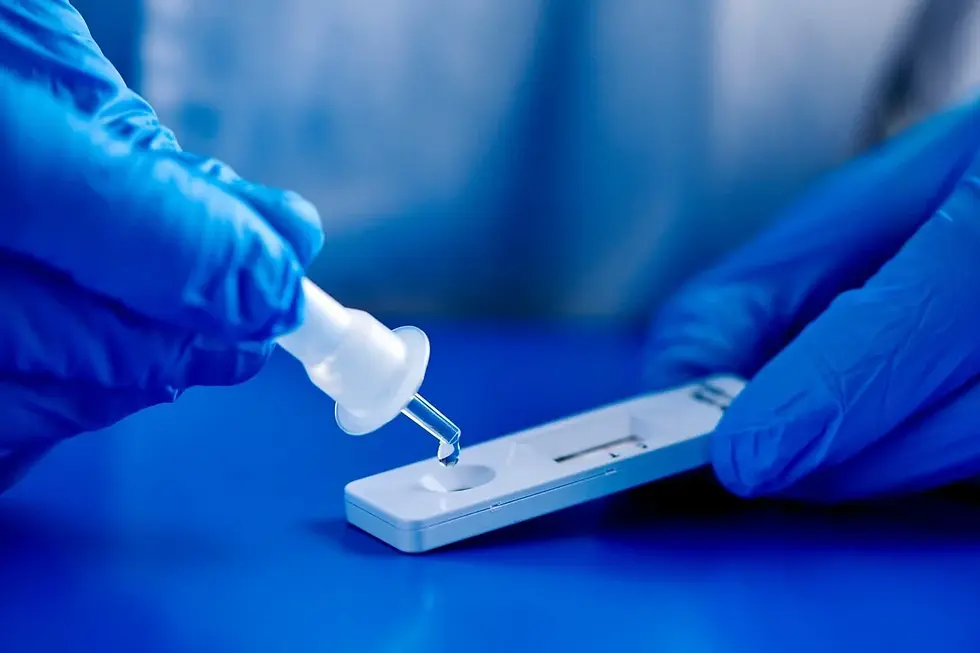

In an era defined by global health threats, antimicrobial resistance, and emerging pathogens, infectious disease labs are not just diagnostic centers — they are the frontline defense of modern medicine. At USALCS, we understand that creating and maintaining such a facility requires precision, vision, and regulatory discipline. These laboratories are essential for identifying, characterizing, and monitoring infectious agents, providing the foundation for both clinical decision-making and public health surveillance.
Our role extends beyond traditional setup — we architect secure, scalable, and automated facilities that combine cutting-edge technologies such as PCR, NGS, and AI-based data analytics. Whether your focus is clinical testing, epidemiological surveillance, or academic research, we help you design infectious labs that meet the world’s most demanding standards. From biosafety compliance to real-time reporting infrastructure, USALCS transforms laboratory spaces into operational ecosystems capable of detecting outbreaks before they spread and saving lives when time matters most.
Each infectious disease lab we develop is engineered to serve a precise scientific or clinical purpose — no two facilities are ever identical. We adapt designs to your testing objectives, sample types, and biosafety levels (BSL-2, BSL-3, or higher if required).
Our scope of work includes:
Comprehensive Laboratory Design: Development of functional layouts that separate high-containment zones, clean corridors, and sample processing areas for optimized biosafety.
Engineering & HVAC Control Systems: Integration of airflow management, negative pressure environments, and HEPA filtration to prevent cross-contamination and ensure environmental stability.
Instrumentation Strategy: Selection, validation, and calibration of platforms such as real-time PCR, immunoassay systems, sequencing machines, and automation robotics for high-volume throughput.
Method Development & Validation: Supporting clinical and research teams in validating infectious disease assays, from common respiratory pathogens to infectious mononucleosis lab test protocols.
Biosecurity & Risk Management: Implementing systems for biological waste management, autoclaving, and emergency containment to meet CDC, CAP, and WHO requirements.
Data Management & Reporting: Deployment of Laboratory Information Systems (LIS) for traceability, digital documentation, and HIPAA-compliant result transmission.
Training & Competency Development: Conducting continuous education programs focused on biosafety, contamination prevention, and quality control best practices.
Financial & Operational Planning: Building realistic cost models and sustainability plans that align with your budget and mission goals.
At USALCS, our philosophy is simple: the better we design your lab, the stronger your defense against infectious threats becomes.
Building an infectious laboratory is a multidisciplinary process that combines architectural design, bioengineering, and regulatory coordination. Our proven process ensures that each project is delivered on time, on budget, and beyond expectation.
Step 1: Initial Consultation & Feasibility Analysis
We begin by defining your operational goals — are you testing patient samples, performing research, or supporting national surveillance programs? This determines everything from biosafety levels to automation needs.
Step 2: Laboratory Design & Engineering Planning
Our architects and engineers create detailed CAD and BIM models that visualize airflow patterns, staff routes, and emergency exits while ensuring adherence to biosafety standards.
Step 3: Vendor Selection & Equipment Procurement
We collaborate with leading suppliers of molecular diagnostics, serology, and microbiology equipment to select validated instruments that meet your testing requirements.
Step 4: Construction & Installation Oversight
Our team supervises all infrastructure installations — including air pressure systems, clean benches, biosafety cabinets, and decontamination stations — ensuring every feature functions perfectly.
Step 5: SOP Development & Quality Validation
We prepare all standard operating procedures (SOPs), contamination control protocols, and calibration schedules that comply with CLIA, CAP, and OSHA standards.
Step 6: Training & Competency Assessment
Before launch, we train your laboratory staff in biosafety practices, data integrity procedures, and emergency response planning, ensuring readiness from day one.
Step 7: Accreditation & Launch Support
We perform mock inspections, finalize compliance documents, and assist in obtaining necessary licenses — delivering a fully certified, inspection-ready laboratory.
This structured roadmap transforms your vision into a functional, safe, and compliant infectious disease facility — one that meets both national and international standards.
Infectious laboratories are regulated more strictly than almost any other facility type — and for good reason. At USALCS, we embed compliance into every phase of your project to ensure the highest safety, ethical, and operational standards.
Our compliance system includes:
Biosafety Level (BSL) Integration: Design and implementation of containment systems suitable for pathogens handled (e.g., BSL-2 for clinical diagnostics or BSL-3 for research).
Regulatory Alignment: Full support for CLIA, CAP, CDC, NIH, and state-level licensing requirements for infectious testing.
Environmental & Worker Safety: Ensuring ventilation, PPE usage, and ergonomic design meet OSHA and NFPA standards.
Data Integrity & Reporting Ethics: Implementing traceable reporting systems and encrypted LIS software to protect patient confidentiality.
Sustainability & Waste Management: Engineering systems for energy efficiency and environmentally responsible disposal of biohazard waste.
Audit & Accreditation Preparation: Providing continuous monitoring, documentation updates, and performance reviews for ongoing compliance.
Our compliance philosophy is not reactive — it’s proactive. We don’t just prepare your lab for inspection; we build it to operate ethically, safely, and sustainably for decades.
Q1: What’s the difference between clinical infectious labs and infectious disease research labs?
Clinical infectious labs focus on diagnosing patient samples for immediate treatment decisions, while infectious disease research labs study pathogen behavior, drug resistance, and vaccine development.
Q2: How long does it take to build an infectious laboratory?
Project timelines typically range from 6 to 10 months, depending on biosafety level, infrastructure complexity, and regulatory requirements.
Q3: Do you handle validation for infectious mononucleosis lab test panels?
Yes, we assist in validating and documenting infectious mononucleosis testing protocols, including EBV serology and PCR-based assays.
Q4: What safety systems are essential for infectious disease labs?
Negative air pressure rooms, HEPA filtration, biosafety cabinets, and controlled access systems are mandatory for most infectious laboratories.
Q5: How do you ensure compliance with biosafety regulations?
We design to meet CLIA, CAP, CDC, and OSHA standards, conduct mock inspections, and provide continuous advisory support.
Q6: Can USALCS upgrade or modernize existing infectious labs?
Absolutely. We retrofit older facilities with new containment systems, automation, and digital data integration while maintaining full compliance.
📞 Build the Future of Disease Detection with USALCS
Partner with USALCS to design, build, and optimize advanced infectious disease labs that meet global biosafety and diagnostic standards. Whether your goal is to enhance testing capacity, expand research potential, or modernize an existing facility, our experts deliver the strategy, technology, and compliance you need to protect communities and advance medical innovation.
Choosing USALCS means gaining more than a laboratory — it means building institutional resilience. Our deliverables are comprehensive, measurable, and aligned with your long-term operational goals.
Deliverables include:
Detailed architectural and engineering drawings (2D/3D)
Fully validated biosafety infrastructure
CLIA and CAP documentation templates ready for submission
Verified equipment installation and performance qualification reports
Customized SOP libraries and training manuals
Staff competency certifications and quality audit checklists
Integrated digital reporting and compliance dashboards
Maintenance, calibration, and performance management schedules
Outcomes and Long-Term Value:
Reduced contamination incidents and operational risks
Faster diagnostic turnaround times for infectious disease detection
Increased testing capacity through automation and optimized workflow
Sustainable operation with energy-efficient systems
Regulatory peace of mind with 24/7 compliance readiness
Improved institutional reputation and trust from regulators, patients, and partners
USALCS provides not just a lab but a foundation for progress in public health and global biosecurity.